Oct 11, 2025 | WW2 Journeys
The Point of No Return
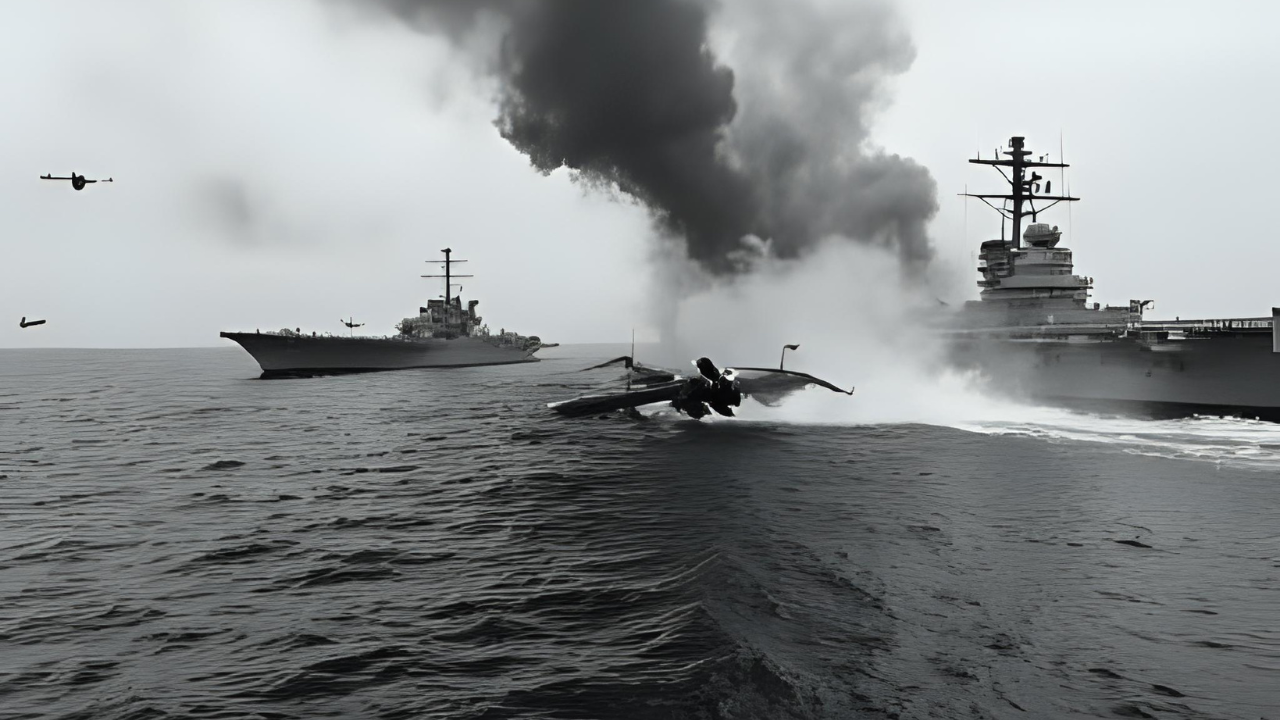
The Battle of Midway June 4th, 1942. 10:25 AM. High above the Pacific, American pilot Lieutenant Commander Wade McClusky peered through his cockpit canopy, his fuel gauge hovering near empty. Below him, a fortuitous break in the clouds revealed not just the open ocean, but the entire Imperial Japanese Navy’s strike force. Four massive aircraft carriers, the pride of Japan, steamed in a perfect formation, their decks bustling with activity.
For months, the Japanese war machine had been unstoppable, conquering territory after territory. But in this moment, the fate of the Pacific War rested on the shoulders of a few dozen exhausted American dive bomber pilots. What happened next would not be a prolonged battle, but a swift, devastating execution that would change the course of World War II.
The Master Plan Unravels
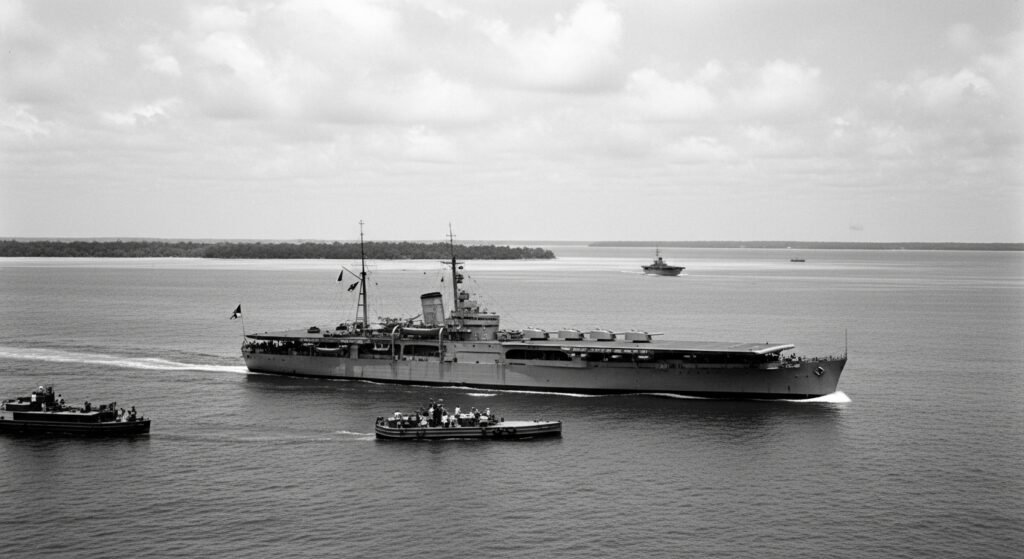
The architect of the Japanese plan was the brilliant Admiral Isoroku Yamamoto, the man who had planned the attack on Pearl Harbor. Yamamoto understood America’s industrial might and knew that a long war favored the United States. His strategy was simple yet devastating: lure the few remaining American aircraft carriers into a trap and destroy them at Midway Atoll.
His “Kido Butai,” or Mobile Strike Force, was the most powerful naval armada ever assembled:
- 4 veteran aircraft carriers (Akagi, Kaga, Soryu, Hiryu)
- Hundreds of experienced naval aviators
- Supporting battleships, cruisers, and destroyers
Against this leviathan, the Americans could muster only three carriers. The USS Yorktown had been so badly damaged at the Coral Sea that Japanese intelligence assumed she was sunk. Yet through a miraculous repair effort, 1,400 workers had made her battle-ready in just 72 hours.
America’s Secret Weapon: The Codebreakers
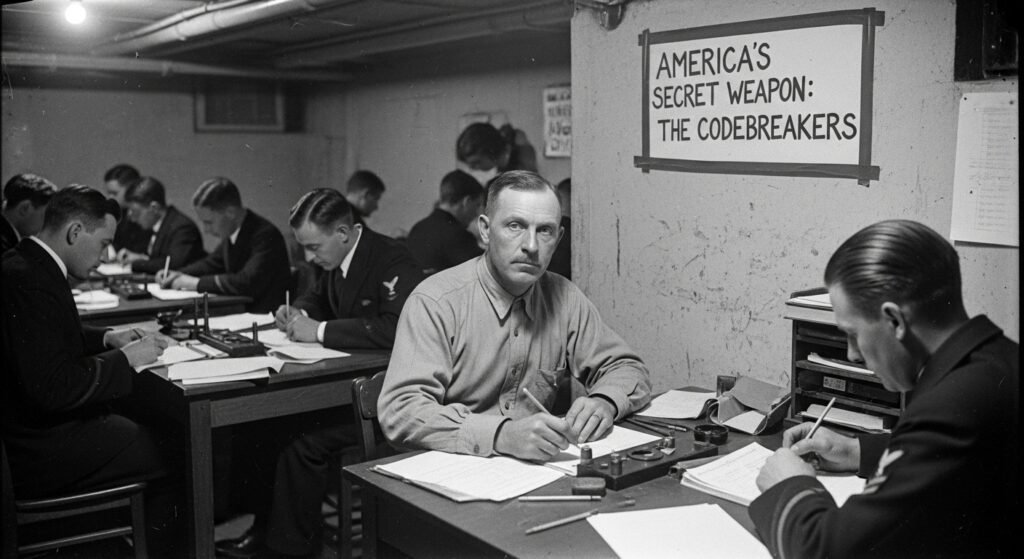
While Yamamoto planned his ambush, the Americans were listening. In a cramped basement in Pearl Harbor, a team of brilliant codebreakers led by Commander Joseph Rochefort had been piecing together the Japanese naval code JN-25.
They intercepted messages pointing to a major operation targeting a location called “AF.” But was “AF” Midway? Rochefort devised a clever ruse: he instructed the base at Midway to send a fake message stating their water distillation plant had broken down. Soon after, American intelligence intercepted a Japanese message: “AF is short of water.”
The trap was confirmed. Admiral Chester Nimitz now positioned his three carriers northeast of Midway, waiting to ambush the ambushers.
The Morning of Chaos and Sacrifice
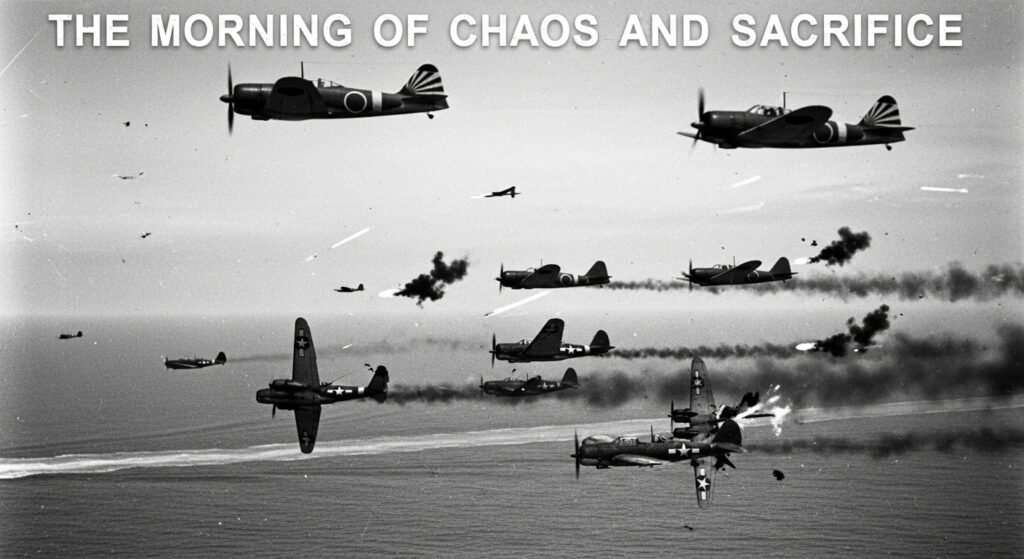
The battle opened badly for the Americans. Their first waves of torpedo bombers and land-based bombers found the Japanese fleet but were slaughtered without scoring a single hit. Squadron after squadron was decimated by Japanese Zeros and anti-aircraft fire.
The sacrifice of these pilots, particularly Torpedo Squadron 8 from the USS Hornet—which lost all 15 planes and 29 of 30 crewmen—was not in vain. Their desperate, low-level attacks pulled the Japanese combat air patrol down to sea level, leaving the skies above the fleet completely undefended.
The Five Minutes That Changed Everything
At that exact moment, high above the clouds, two squadrons of American Douglas SBD Dauntless dive bombers arrived. They had gotten lost, were low on fuel, and were moments from turning back. Then, through a break in the clouds, they spotted their target: the entire Japanese fleet.
With no Zeros to stop them, they nosed over into near-vertical dives. For the pilots, the world shrank to the flight deck of a carrier growing larger in their sights. The iconic screech of their dive sirens—”hell’s sirens”—pierced the sky as they fell.
At 2,000 feet, they released their bombs.
The Inferno Below
What happened next was apocalyptic. The Japanese flight decks were at their most vulnerable—strewn with bombs, torpedoes, and fuel hoses from frantic re-arming operations.
- Kaga took a direct bomb hit near the bridge, detonating armed aircraft on deck
- Akagi suffered a catastrophic hit that ignited fuel and ammunition
- Soryu absorbed three direct hits and was instantly transformed into a blazing wreck
In less than five minutes, three of the four Japanese carriers that had attacked Pearl Harbor were reduced to sinking, burning hulks. The fourth carrier, Hiryu, would launch a counter-strike that crippled the Yorktown before being sunk later that day.
The Legacy of Midway
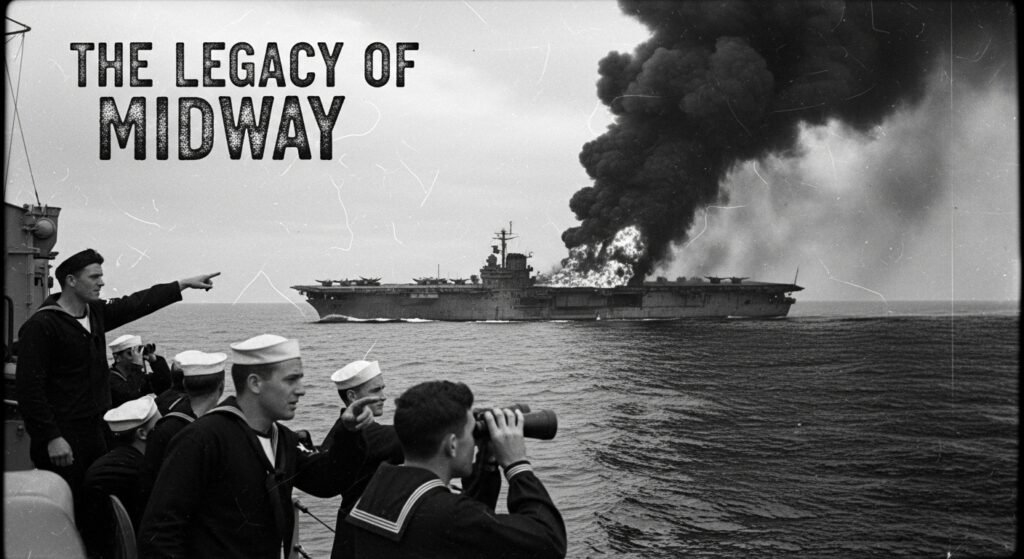
The Battle of Midway was more than a victory—it was the pivot point of the Pacific War. The implications were immediate and profound:
Strategic Impact:
- Japan lost four irreplaceable aircraft carriers
- Their most experienced naval aviators were killed
- The initiative permanently passed to the United States
Human Cost:
- Japan: 3,057 casualties, 4 carriers, 1 heavy cruiser
- United States: 307 casualties, 1 carrier, 1 destroyer
The Japanese navy, which had ruled the Pacific for six months, was broken. They would never again launch a major offensive. The victory at Midway set the stage for the American island-hopping campaign that would eventually lead to Japan’s doorstep.
Remembering the Courage
The victory at Midway was forged from multiple elements:
- Brilliant intelligence from codebreakers who turned the tide before the first shot
- Daring leadership from commanders like Nimitz who trusted their intelligence
- Unthinkable courage from torpedo bomber crews who pressed attacks knowing their odds of survival were near zero
- Flawless execution from dive bomber pilots who performed under extreme pressure
The five minutes between 10:25 and 10:30 AM on June 4th, 1942, didn’t just win a battle—they shattered an empire’s ambition and saved the Pacific. The echoes of those screaming dive bombers faded over the ocean, but their impact would ring through the rest of the war, and the world that emerged from it.
Want to learn more about decisive World War II battles? Check out our other articles on The Ghost Army and D-Day’s First Hours.
Subscribe to our newsletter to get weekly history articles delivered to your inbox!